
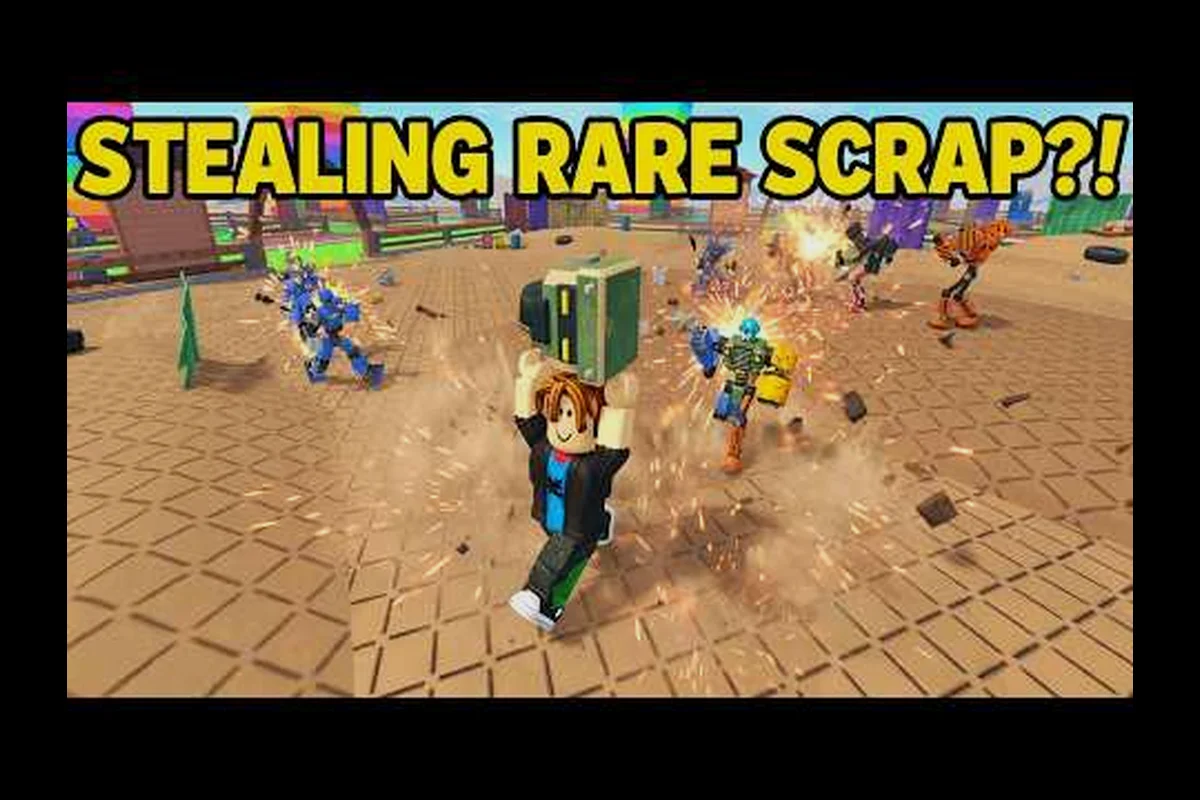
Steel Fighters how to get scraps matters because Scrap is the core upgrade material for your first robot and every stronger build that follows. Claim starter rewards, farm the Junkyard, clear floors, and invite a friend to accelerate your opening sessions.
Steel Fighters How to Get Scraps for a Strong First Robot
The fastest route to Scrap is a repeatable early-game loop: collect available rewards, gather Scrap in the Junkyard, advance through floors, and reinvest the proceeds into useful robot parts. This matters because a steady income lets you improve the Steel Fighters first robot without wasting resources on upgrades that merely raise one number.
The starting resource plan
Steel Fighters starting out rewards should be treated as a one-time boost, not the foundation of your economy. The official Steel Fighters game page on Roblox describes a simulation centered on assembling robots from mix-and-match parts, clearing floors, and collecting Scrap in the Junkyard. That means new players have both a direct collection area and several combat-related paths to explore.
A useful opening plan is to claim what is already available, collect every free Scrap source, and then alternate between the Junkyard and floor progress. Avoid spending immediately unless a part creates a clear improvement. Keeping a small reserve makes it easier to respond to a useful part drop without grinding for another full session.
| Priority | Source | Best use | Recommended timing |
|---|---|---|---|
| 1 | Starter and promotional rewards | Add to the first upgrade fund | Before major purchases |
| 2 | Junkyard collection | Build a repeatable Scrap income | During each session |
| 3 | Floor clears and chests | Supplement normal collection | As floors are unlocked |
| 4 | Friend-related rewards | Accelerate the opening build | When a qualified friend joins |
| 5 | Rebirth progression | Improve future earning efficiency | Only after rebuilding is ready |
Day-One Scrap Checklist
Start with a clear checklist so that Scrap collection does not get interrupted by menu management. First, redeem any available starter rewards, then enter the Junkyard and collect the Scrap that appears through its normal activity. Next, clear the earliest floor that can be completed without relying on a risky lineup.
The robot does not need to be perfect during those early clears. Its job is to keep progression moving while producing rewards that can fund stronger parts. As the build improves, revisit the Junkyard because player experience reports indicate that its collection loop is one of the most reliable early sources for new accounts.
Use this checklist for the first session: redeem uncollected starter rewards before entering the Junkyard, then collect the Scrap generated by its normal activity loop before opening any upgrade menu. Treat this as a setup sequence rather than a one-time farm: the early floor clear with the easiest available robot supplies the initial progress needed to test upgrades, while the Junkyard remains a dependable Scrap source for the next part purchase. For example, a first robot may have enough survivability to clear Floor 1 but not to justify replacing a role-critical part immediately; compare stats and role coverage first, and spend only when the new part improves the bot lineup you actually need.
- Claim every uncollected starter reward.
- Collect Scrap from the Junkyard before opening upgrade menus.
- Clear an early floor with the easiest available robot.
- Compare the new part with the equipped part before spending.
- Upgrade only the part that improves the role you need most.
- Save enough Scrap for the next likely upgrade.
Steel Fighters How to Get Scraps: Repeatable Income Sources
Once the one-time rewards are gone, Steel Fighters how to get scraps becomes a matter of choosing the source with the best time-to-value ratio. The Junkyard is the most obvious source, while floor clears, chests, and social bonuses can add meaningful value when they fit naturally into your session.
Junkyard collection
The Junkyard should be your baseline because it is directly associated with Scrap collection in the official game description. Start a route by moving between the available collection points, collecting what has spawned, and checking the reward panel before leaving. Community guides repeatedly describe early Junkyard runs as a dependable way to fund the first set of part upgrades.
The key is to treat each visit as part of a complete rotation. Collecting without spending keeps your options open, and a short floor run afterward can convert the same session into both Scrap income and additional rewards. If a part drops that fits your build, reserve the Scrap immediately rather than spreading it across several weak upgrades.
| Collection method | Main advantage | Main limitation | Best use |
|---|---|---|---|
| Direct Junkyard runs | Simple and repeatable | Limited by available collection points | Daily baseline income |
| Floor chest drops | Adds value during combat | Requires a functional robot | Mid-session supplement |
| Boss or milestone rewards | Stronger reward potential | Takes more preparation | Milestone preparation |
| Social rewards | Passive boost to progress | Usually requires a qualifying partner | Opening build |
| Rebirth-based income | Improves later efficiency | Requires resetting the account | Long-term progression |
Floor rewards and chest drops
Floor progression turns Scrap collection into an active goal rather than a repetitive task. Each cleared floor can reward you with currency, items, or materials needed for the next robot upgrade, depending on the current game version. The exact reward distribution can change, so treat floor-specific amounts as version-dependent and verify them in the live reward panel.
For a new account, a sensible order is to complete the easiest floor, collect every reward, and upgrade only if a meaningful part has appeared. After the lineup is stable, push one floor at a time. This creates a controlled feedback loop: the robot becomes stronger, the next floor becomes easier, and every successful clear contributes to the Scrap reserve.
If you want more detail on alternate income, the guide to getting Cash quickly in Steel Fighters explains how Cash and Scrap fit into the broader progression economy. Keep the two resources separate, however, because a Cash-heavy purchase may not directly improve the part you need.
Steel Fighters Friend Bonus Cash and Social Rewards
Playing with friends can accelerate the opening grind because social rewards may add Cash, Scrap, or other progression benefits when a qualifying partner joins. That makes the Steel Fighters playing with friends bonus useful even when the group cannot coordinate for long boss runs, because the reward can support a solo player’s first build.
Inviting a reliable partner
The Steel Fighters friend bonus cash can be checked by opening the relevant reward panel after a friend joins or after the required session condition is met. Because bonus requirements may change, confirm the current conditions in the game instead of assuming that a single friend request always grants the same item.
The safest approach is to invite someone who can enter the same activity session and remain online long enough for the bonus to register. Once connected, continue your normal Scrap collection route. Social bonuses should supplement the economy rather than replace active farming, because one reward cannot cover repeated part upgrades.
| Social condition | What to check | Practical action |
|---|---|---|
| Friend joins the server | Connection and reward prompt | Open the social panel and claim |
| Playtime requirement | Session progress | Stay active until the timer completes |
| Group or code reward | Account eligibility | Redeem only after verification |
| Shared floor activity | Team eligibility | Continue if the party is ready |
| Bonus not received | Platform and account state | Retry after reconnecting and checking eligibility |
The Steel Fighters guide to playing with friends covers party setup and friend-related benefits in more detail. The important economic point is that a friend bonus is a multiplier for your session plan, not a substitute for collecting Scrap and clearing floors.
Do not confuse Cash with Scrap
Cash and Scrap may support different parts of the progression system, and rewards can be mislabeled in hurried videos. Before making an upgrade, check the required currency shown beside that part. Do not assume a Cash reward can replace Scrap, even when both appear in the same reward summary.
Community tutorials often group Cash, Scrap, and part upgrades into one early-game tutorial, which can make the distinction unclear. The safest method is to read the live interface: if the upgrade panel requests Scrap, only Scrap fulfills that cost. This simple check prevents the frustrating situation where a player collects plenty of Cash but still cannot level the intended component.
Spending Scrap Without Wasting Your First Robot Build
Collecting Scrap is only half of the task. Knowing when to spend it is equally important because early robots have limited parts and resources. A focused build creates a stronger foundation than spreading a small amount of Scrap across every available component.
Compare the actual upgrade
Start by identifying the stat that is limiting your clears. If the robot loses fights before damage becomes an issue, prioritize durability or useful health. If it survives but cannot defeat enemies, damage is more valuable. The Steel Fighters robot parts overview explains how mix-and-match parts can be evaluated without treating one large stat as the only measure of strength.
| Robot need | Better investment | Why it helps |
|---|---|---|
| Repeatedly loses early fights | Health or defensive part | Increases survival during longer encounters |
| Wins slowly but runs out of time | Damage or attack-speed part | Shortens fights and improves clear speed |
| Parts break after several runs | Durability-focused upgrade | Reduces replacement pressure |
| No clear role for the current parts | Flexible secondary build | Preserves options for floors or rewards |
| Strong robot but slow income | Save Scrap for next core part | Builds a meaningful upgrade path |
Save for set-changing drops
A common mistake is spending every Scrap immediately because the upgrade menu allows small purchases. Save enough for a major replacement instead, especially when the current build already clears the intended floors. Community reports often identify spare resources and set-changing parts as reasons for faster progression, although specific part values can change with updates.
Keep a simple reserve in mind: set aside a defined portion of each Scrap haul instead of immediately buying minor upgrades. If your current robot can reliably clear the intended floors, preserve enough Scrap for a set-changing part that improves the build’s role or unlocks a stronger progression path. For example, leave the next upgrade’s full cost untouched when that upgrade is already planned, then use the remainder for a clearly needed part rather than spreading Scrap across several temporary purchases. This creates a buffer for important replacements and helps you progress faster without wasting the resources required for your next major upgrade.
-
Immediate fund: Scrap needed for the next guaranteed upgrade.
-
Flex fund: Scrap saved for a part that fits a clearly defined role.
-
Rebirth fund: Resources preserved for the next progression reset.
Tracking Scrap in separate funds makes each collection session more purposeful: reserve the full cost of the next guaranteed upgrade as the immediate fund, keep a flex fund for a role-defining part, and protect a rebirth fund for the next progression reset. For example, if a set-changing replacement costs twice as much as a minor upgrade, saving toward that larger cost prevents upgrade-shop purchases from consuming the Scrap needed to unlock a stronger robot build.
Efficient Steel Fighters Starting Out Routine
A reliable Steel Fighters starting out routine uses short, repeatable sessions instead of one long unstructured grind. Collect the obvious rewards first, farm the Junkyard, clear a floor, and inspect the resulting upgrades before deciding what deserves the next purchase.
A session built around three goals
Give every session three concrete objectives. A typical objective set is collecting the Junkyard Scrap, clearing one additional floor, and saving for a specific part upgrade. This approach makes progress visible and prevents the common problem of spending everything immediately after a single lucky drop.
| Session length | Main activity | Secondary activity | Good outcome |
|---|---|---|---|
| 5–10 minutes | Junkyard collection | Check reward panels | Quick Scrap increase |
| 15–25 minutes | Junkyard plus one floor | Collect floor rewards | Balanced income and progress |
| 30–45 minutes | Extended farm and floor push | Test an upgraded part | Better build plus resources |
| Flexible | Rebirth and rebuild cycle | Reapply upgrade priorities | Stronger future earning rate |
Track income by source
Keep a simple record of where each session’s Scrap came from. After several runs, you can identify the best source for your account and avoid wasting time on lower-value activities. The exact efficiency depends on the robot, floors available, and current patch, so community-reported rates should be treated as a starting point rather than a guaranteed formula.
For stronger progression after the opening stages, use the Steel Fighters leveling guide to connect upgrade spending with combat performance. A useful account improves in a deliberate order: secure the first robot, stabilize floor progress, expand the Scrap income, and only then chase more expensive targets.
Common Mistakes That Slow Scrap Collection
Most slow starts come from missed rewards, premature spending, or spending too much time in one activity. Correcting these mistakes often produces a better result than changing the entire routine. The following checks are based on the official feature set and recurring community advice.
Missing the repeatable part
A common mistake is collecting only once and then leaving the Junkyard. Return after the collection cycle refreshes, clear nearby floor rewards, and verify that each reward panel has been opened. The official game page identifies the Junkyard as a place for collecting Scrap, while community experience confirms that repeated collection is central to early funding.
Another error is assuming a robot must be fully upgraded before farming. A reasonably durable robot that clears the starting floors is enough to produce resources, and the Scrap it earns can support the upgrade that makes the next stage easier.
Spending without a plan
Before buying, identify the exact stat problem, the expected improvement, and the next floor you want to reach. If two parts compete for the same budget, use the one that solves the immediate bottleneck. This prevents the Scrap reserve from disappearing into many low-impact changes.
A short decision rule works well: compare each upgrade’s scrap cost with its expected effect on the current bottleneck, then spend only when the gain justifies delaying another purchase. For example, if a robot is losing before it can reach its opponent, durability should outrank a damage part; if it survives but times out, damage or speed may produce better value. This keeps the Scrap reserve intact for a larger, set-changing upgrade when a later drop offers a stronger improvement.
-
Cannot survive: Improve durability first.
-
Can survive but cannot finish: Improve damage or speed.
-
Already clears the target: Save for a larger set-changing part.
-
Uncertain value: Wait and compare the next drop.
Ignoring account-level benefits
The Steel Fighters friend bonus cash and group or promotional rewards can add resources without replacing manual collection. Check eligible bonuses before beginning a farming session so a qualifying friend or code does not go unused. Never redeem an unverified code from an unknown source, and treat community reward claims as temporary until they appear in the official interface.
Frequently Asked Questions
What is the fastest way to collect Scrap in Steel Fighters?
The fastest repeatable approach combines Junkyard collection with floor clears. Claim all starter rewards, gather Scrap during each Junkyard visit, then clear the easiest available floor to add chest and milestone income. Save the proceeds until you can buy a meaningful part upgrade instead of spending on several tiny improvements.
Should I upgrade every robot part equally?
No. Upgrade the component that limits your current progress. A robot that dies quickly needs durability, while one that survives but times out needs damage or attack speed. Keep enough Scrap in reserve for a larger replacement, and revisit the build whenever a new part matches the role you need.
Does a friend bonus provide Scrap or Cash?
Rewards can differ by bonus, so check the requirement and reward label in the live interface. The Steel Fighters friend bonus cash may help fund other purchases, but only the displayed Scrap reward can replace Scrap in an upgrade cost. Claim the bonus after its condition is met and reconnect if it does not register.
When should a new player rebirth while gathering resources?
Rebirth when the current build reliably clears its intended floors, the next major upgrade is funded, and the temporary loss of current progress will not block immediate progress. A first robot does not need to be perfect, but rebuilding too early can leave you without enough resources for a stronger replacement.
Is the first robot worth investing Scrap into?
Yes, if the investment improves the role needed to clear early floors. Start with one core build rather than dividing Scrap across every available robot. Upgrade the part that removes your clearest bottleneck, collect again, and then expand only after the current robot has a stable purpose.