
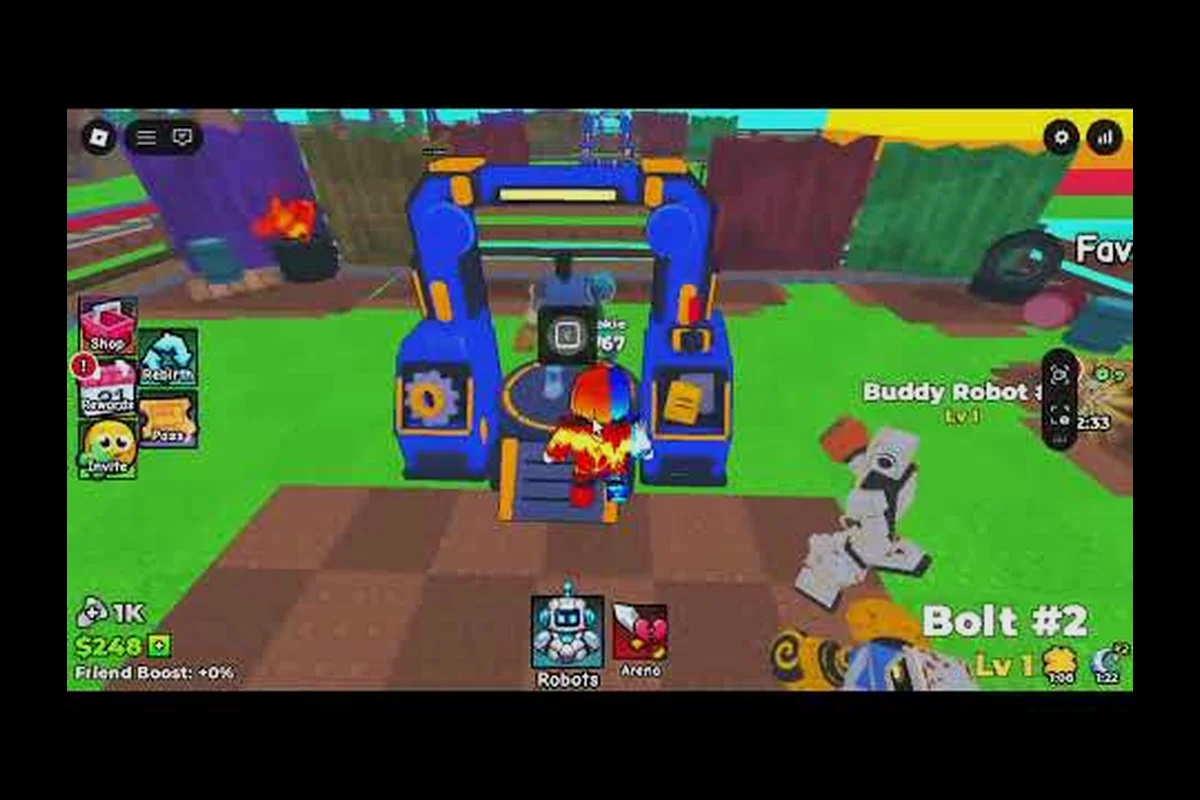
Steel fighters solo vs multiplayer rewards different priorities: solo runs favor steady self-sufficiency, while cooperative sessions reward coordinated upgrades. The right stat choices can shorten the grind and make every Scrap purchase count. In solo play, prioritize damage, survivability, and mobility so each wave remains manageable without relying on a teammate’s cover; in multiplayer, pairing complementary stats and planning upgrade purchases lets the squad handle tougher encounters more efficiently.
Steel Fighters Solo vs Multiplayer: Which Play Style Fits You?
Steel Fighters is a robot-building and combat simulator where players assemble machines from interchangeable parts, clear floors, collect Scrap, and pursue stronger upgrades. The official Steel Fighters game page describes more than 100 robots, endless floors, boss battles, and a Junkyard where parts can be upgraded, making build quality central to progression.
The central Steel Fighters solo vs multiplayer choice is not about selecting a completely different activity. The same core loop applies in both modes: earn resources, improve individual parts, move through floors, and rebuild your robot when a new combination becomes stronger. The difference lies in how forgiving your progression will be when one build has a weakness or you need to contribute to a shared objective.
Solo play is best for players who value control, predictable routines, and the freedom to change a robot without coordinating around another person's schedule. Multiplayer is best for players who enjoy faster social progress, shared goals, and the additional rewards associated with cooperative play. Understanding the upgrade economy first makes either choice more effective.
| Consideration | Solo Play | Multiplayer Play |
|---|---|---|
| Main benefit | Full control over every build choice | Shared progress and social rewards |
| Main weakness | Every defeated enemy depends on your robot alone | Group goals can dilute personal upgrade priorities |
| Best upgrade mindset | Survival and personal efficiency | Personal power plus team usefulness |
| Rebuild timing | Based on your available resources | Based on both personal and group needs |
| Early-game focus | One dependable starter robot | A flexible robot for standard group encounters |
This comparison also matters because rebirths, friend bonuses, and group rewards can accelerate growth, although their exact values may change with balance updates. Community guides report that a useful rebirth multiplier is worth reaching only after the current robot can reliably clear the desired floors. That advice favors preparation over rushing a reset whenever a new option appears.
Understanding the Steel Fighters Upgrade Economy
An efficient Steel Fighters upgrade guide starts with the resource loop rather than a particular menu. The official listing identifies Scrap collection in the Junkyard, part upgrading, rebirths, and floor progression as core features. These systems reward players who know which bottleneck is slowing down their current run.
Before spending, identify whether the robot is losing fights because its damage is too low, its health runs out too quickly, or its movement and attack speed create an inefficient opening. Raising one stat without addressing the actual failure can waste resources because damage will not compensate for a robot that cannot survive long enough to use it.
Separating Core Stats From Build Choice
Core stats determine performance, while build choice determines how those stats are applied. A balanced robot may handle early floors safely, whereas a specialized robot can clear a specific boss faster but struggle against a different enemy pattern. The distinction matters because the best result often comes from a dependable foundation followed by a targeted adjustment.
| Stat | Primary Value | Best Situation | Weakness If Overprioritized |
|---|---|---|---|
| Health | Survive incoming damage | Solo boss attempts and crowded floors | Lower damage output |
| Damage | Reduce enemy health pools | Fast floor clears and boss damage | Less margin for mistakes |
| Attack speed | Increase attack frequency | High-pressure encounters | May waste damage against weak enemies |
| Movement speed | Reach targets and control spacing | Chasing enemies and evasive fights | Does not improve staying power |
| Critical chance or damage | Add burst potential | Boss damage and faster eliminations | Inconsistent when values are low |
| Special ability | Create a powerful opening or area effect | Difficult bosses and crowded groups | Usually depends on correct timing |
If you want narrower advice on individual components, the guide to the best Steel Fighters arm parts can help identify which limb choices match a particular upgrade plan. The useful comparison is not whether one part is always strongest, but whether it supports the stat your current build lacks.
Spending Cash and Scrap Efficiently
Cash and Scrap both matter, yet they should not be treated as interchangeable currencies. Cash is commonly associated with purchasing or improving gear, while Scrap comes from combat and Junkyard activity. Community reporting on efficient farming recommends collecting both while pushing floors, because returning to the Junkyard after a run can fund upgrades that would otherwise wait too long.
A practical sequence is: push through a floor until the current robot earns enough Cash and Scrap to justify the next stat upgrade, then fight a higher-tier opponent to test it. If the upgraded robot still loses because of low HP, prioritize Health over Damage; if survival is secure but damage output is weak, improve Damage next. This targeted approach matters more in solo Steel Fighters, where every upgrade must improve the only robot the player controls, while multiplayer matches can shift the value of a stat depending on the opposing bot’s build.
-
Clear enough floors to collect Scrap and Cash reliably.
-
Compare the current robot with the next affordable upgrade.
-
Upgrade the stat that directly addresses the latest defeat.
-
Test the change before spending the rest of the budget.
-
Preserve enough resources for a rebuild or rebirth.
Before committing resources, compare the purchase cost of the next Health, Damage, or other stat upgrade with the robot’s current performance on the last defeat. For example, if the bot is surviving most encounters but cannot finish before the opponent’s HP advantage, improving Damage may produce a better return than adding Health. This prevents spending Cash and Scrap on every available slot, gives solo and multiplayer players a shared upgrade rule, and leaves the final choice responsive to the opposing bot’s build.
Steel Fighters Best Stats to Upgrade by Objective
There is no single stat that wins every encounter. The Steel Fighters best stats to upgrade depends on whether the goal is steady solo progression, fast clears, boss damage, or dependable support in a group. A useful build has one main role, one supporting strength, and enough flexibility to handle ordinary floors.
According to the Steel Fighters game page on Roblox, Steel Fighters supports solo play as well as multiplayer battles.
Solo Runs: Prioritize Reliable Clear Power
Solo players receive no teammate backup, so survivability and repeatable damage are the most valuable qualities. Health or equivalent durability should be the first consideration when enemies deal enough damage to end a run. Once the robot can survive its target floor, damage becomes the next natural investment because it directly reduces the time spent fighting.
Movement can be valuable when a robot is frequently caught, repositioned, or forced into a slow attack pattern. Attack speed should generally follow damage, since extra attacks have limited value if each one remains weak. For solo progression, a good practical order is health, damage, then whichever of attack speed or movement speed fixes the clearest mechanical problem in the current robot.
| Solo Priority | Recommended Investment | Why It Comes First |
|---|---|---|
| First | Health or durability | Prevents one mistake from ending the run |
| Second | Damage | Speeds up clears and reduces incoming damage time |
| Third | Attack speed | Adds attacks after the robot can survive its targets |
| Fourth | Movement speed | Fixes positioning or pursuit problems |
| Fifth | Burst stats | Improves specialized encounters after basics are stable |
Boss Fights: Increase Damage Without Losing Safety
Boss fights reward a different balance because damage can determine the number of attacks received. Raising health has value, but an excessively durable bot with weak damage may spend the entire encounter under pressure. The practical target is enough health to finish a missed attack cycle, then enough damage to prevent the boss from extending that cycle too long.
Special abilities deserve special attention when their activation is reliable. A powerful ability with a slow activation rate can be less useful than a moderate ability that triggers during the boss’s most dangerous phase. Players should test abilities on standard floors before committing scarce upgrade materials to them.
Multiplayer Sessions: Upgrade for Team Value
Multiplayer changes the value of consistency. Group members can cover weaknesses, but your robot still needs to contribute meaningful damage or control. A slightly general-purpose build is often more valuable in a group than an extremely narrow one, because it can handle several enemy types while other players specialize.
Friends and group rewards may improve the pace of progression, according to player experience shared in community guides. These bonuses can make a moderate personal upgrade feel stronger, but they should not be used as a reason to ignore basic survivability. A bot that collapses before its damage contributes reduces the team’s efficiency as well as your own.
Steel Fighters What to Upgrade First: A Decision Method
A clear Steel Fighters what to upgrade first checklist begins by recording the reason for the last failed attempt. If the robot died without removing a significant portion of the enemy, add durability. If it nearly won but needed more damage, increase damage. If the main problem was getting hit before attacks could land, movement or opening damage deserves attention.
This diagnosis is more reliable than following a universal build because enemies and floors can expose different weaknesses. For example, if a solo encounter forces you to fight a durable target while a multiplayer wave rewards quick target switching, durability and opening damage may take priority over raw damage. Recheck the Steel Fighters best stats to upgrade after each failed attempt, and adjust the build whenever a new robot part changes your available stat distribution.
A Five-Step Upgrade Decision
-
Record the failure: Write down the floor, enemy, and main cause of defeat.
-
Check your lowest practical stat: Do not treat the smallest number as automatically bad; evaluate whether it causes repeated failures.
-
Buy one meaningful increase: Avoid spreading a small bonus across many unrelated stats.
-
Retest on the same floor: A clean retest shows whether the adjustment fixed the actual problem.
-
Stop before wasting resources: Keep enough for the next rebuild when the improvement no longer feels efficient.
| Symptom | Likely Priority | Test |
|---|---|---|
| Robot dies quickly | Health | Survive the same floor without dying |
| Battles take too long | Damage | Reduce enemy health in fewer exchanges |
| Attacks rarely connect | Movement or ability timing | Land the opening attack more consistently |
| Damage feels inconsistent | Critical stats | Compare results across several enemies |
| Strong on one floor, weak elsewhere | General-purpose stats | Test two different enemy types |
When to Save Instead of Upgrading
Saving is a valid upgrade strategy when the next affordable tier is much stronger than your current one, or when a rebirth is close. Community rebirth guides recommend building enough momentum for a meaningful multiplier and checking what carries over before resetting. Exact thresholds and rewards can change, so the current in-game display should take priority over old video or article estimates.
Do not spend every resource simply because an upgrade menu is available. Keep a rebuild reserve, especially in solo mode, where you may need to replace several parts after discovering a new combination. In multiplayer, reserve enough to maintain your contribution while the group completes immediate goals.
Rebuilding Parts Without Wasting Resources
Rebuilding is part of Steel Fighters progression, and the guide to Golden Dice and part rerolls is useful when you need a specific stat distribution or want to evaluate alternate parts. Rerolls should answer a defined question, such as whether improving movement would fix repeated positioning failures or whether a stronger torso would prevent early deaths.
Upgrade the Build, Not Every Part
A common mistake is to assume that equal investment in every limb creates balance. Unequal investment can be more effective when one part supplies your main strength, another protects the robot, and the remaining parts support the core strategy. This is especially important for a build using critical damage, attack speed, or a powerful special ability.
Before changing parts, compare the robot's current purpose with the next target. If the robot is an efficient solo all-rounder, preserve the balanced foundation. If it is a boss damage build, concentrate on the parts that improve attack output while maintaining just enough defense to complete the fight.
| Rebuild Reason | Best Action | Result |
|---|---|---|
| New part exceeds current main-stat source | Equip it and retest | Better base performance |
| A stat is overinvested | Replace or reroll selectively | More resources for useful stats |
| Special ability needs a different attack range | Change the related limb | Better ability consistency |
| Current build cannot clear its target floor | Upgrade a clear weakness | Faster progress without a full reset |
| Rebirth is approaching | Finish a tested build, then reset | Stronger multiplier without unfinished gear |
Players comparing late-game combinations can also consult the Steel Fighters legendary parts overview to identify upgrades worth testing. Treat any tier ranking as community-informed rather than permanent, because part balance and reward rates may change after updates.
When to Rebirth and How Multiplayer Changes the Decision
Rebirth resets progression to create stronger long-term multipliers, so timing affects the value of every upgrade made before the reset. The Steel Fighters solo vs multiplayer comparison becomes especially important here: a solo player controls the exact moment of rebirth, while a multiplayer player may prefer to wait until group objectives or short-term rewards are complete.
Community rebirth guides emphasize accumulating sufficient progress before resetting, checking the multiplier, and reviewing what remains unlocked or carried over. Because the official page confirms rebirth as a progression feature but does not establish a permanent best reset point, use the current in-game requirements rather than relying on one fixed number.
| Rebirth Situation | Solo Recommendation | Multiplayer Recommendation |
|---|---|---|
| Weak current robot | Keep farming until the next power spike | Finish immediate group goals first |
| Strong robot and useful multiplier | Rebirth when the gain is meaningful | Rebirth when group timing allows |
| Limited Cash and Scrap | Rebuild before committing to reset | Preserve resources needed for the group |
| New player | Delay the first reset | Delay until basic group rewards are understood |
Multiplayer should not automatically trigger an earlier reset. A friend bonus can speed up progression, but it can also make the timing feel rushed. Compare the expected multiplier gain with the parts and resources you would replace, then choose the point at which your next run should begin with a clear advantage.
Solo and Multiplayer Weekly Progress Plan
A repeatable schedule helps both modes because it separates earning, upgrading, and testing. Solo players can use dedicated sessions, while multiplayer players can divide responsibilities without making every activity dependent on group availability. A simple plan also prevents the common problem of collecting resources without converting them into meaningful power.
Solo Routine
-
First session: Clear early floors, collect Scrap and Cash, and improve the weakest practical stat.
-
Second session: Test the revised robot against the previous stopping point.
-
Third session: Farm the most efficient reachable floor and assess a rebirth.
For specific resource farming, the Steel Fighters fast Cash guide can help organize farming sessions, but the target should remain a floor or activity the current robot can clear consistently. A slightly lower reward that requires no repairs is often more efficient than a difficult run that repeatedly ends in defeat.
Multiplayer Routine
-
Before the group session: Upgrade one personal weakness and keep a rebuild reserve.
-
During the session: Focus on the floors or bosses requested by the group, while still collecting enough resources for personal progress.
-
After the session: Compare the new group rewards and friend bonuses with your solo progression needs.
Multiplayer players can also use the Steel Fighters friends and cooperative guide to understand bonuses and social features. The most efficient group build is not always the one with the highest personal score; it is the one that contributes consistently without requiring frequent last-minute repairs.
| Time Block | Solo Action | Multiplayer Action |
|---|---|---|
| Short session | Collect resources and test one stat | Complete a focused group floor or boss |
| Medium session | Upgrade, retest, and farm | Upgrade, join group goals, and share roles |
| Long session | Plan a rebuild or rebirth | Coordinate bosses, then review rewards and personal goals |
| End of session | Save for the next tier | Preserve a personal rebuild reserve |
Final Upgrade Recommendations
The best Steel Fighters upgrade strategy is objective-driven. Solo players should build a dependable robot that survives, deals consistent damage, and clears floors without wasting resources. Multiplayer players need similar foundational strength, but their build should also remain useful across different group encounters and objectives.
Before purchasing anything, review the last defeat, identify one measurable problem, and make a single meaningful change. Save for rebuilds, test parts carefully, and use rebirth when the current multiplier justifies resetting your progress. Across both play styles, reliable damage, sufficient survivability, and purposeful part choices produce stronger results than spreading resources across every available stat.
Frequently Asked Questions
Is Steel Fighters better in solo or multiplayer?
Neither mode is universally better. Solo play offers control and consistent practice, while multiplayer can accelerate progression through friend bonuses, group rewards, and shared objectives. Choose solo if you prefer self-directed building; choose multiplayer if you enjoy coordination and can contribute reliably to a group.
Which stat should I upgrade first in Steel Fighters?
Usually, prioritize health or durability if you die quickly, then damage if the robot survives but fights take too long. Movement or attack speed becomes more valuable when positioning or attack frequency is the clear problem. Always base the decision on the latest defeat instead of one fixed build order.
Should multiplayer players use the same robot as solo players?
Not necessarily. A multiplayer robot should remain versatile enough for common group encounters, while a solo robot can be more specialized for a difficult boss or repeatable floor. If your multiplayer build becomes too narrow, preserve a balanced alternative so you can still contribute when enemy types change.
When is the best time to rebirth in Steel Fighters?
Rebirth when the permanent multiplier gain clearly outweighs the progress and resources you will rebuild. Check the current requirements, multiplier, and retained items before resetting because community-reported thresholds may not match the latest balance. A tested strong robot and a funded next run make a rebirth safer.
How can I decide between damage and movement upgrades?
Compare your recent defeats rather than the stat totals. Choose damage if enemies survive too long during normal exchanges; choose movement if you cannot reach enemies, hold a favorable position, or land attacks consistently. A short floor test after the purchase will show which problem the upgrade actually solved.