
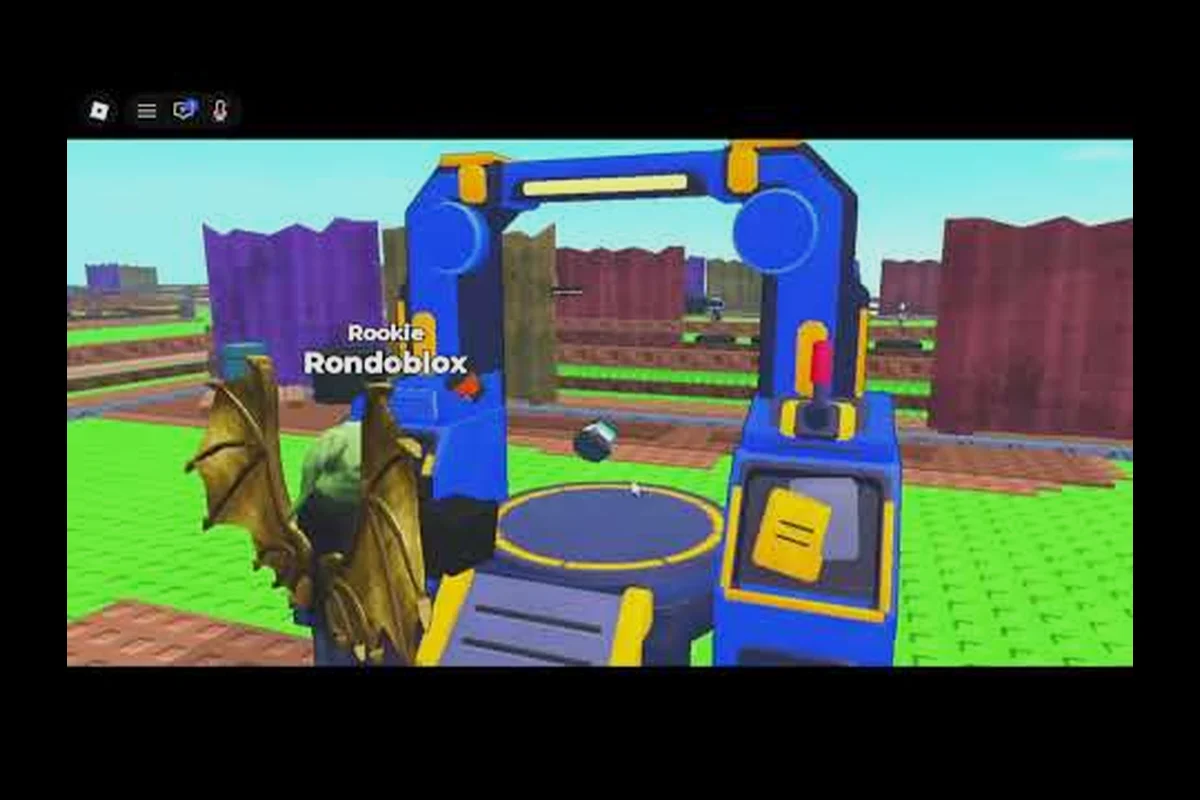
Steel Fighters robot parts determine a robot’s strengths, weaknesses, and upgrade potential, so collecting the right combination matters as much as reaching a later floor. Learn where components appear, how rarity affects your options, and how to turn every part drop into useful progress.
Steel Fighters Robot Parts and the Build System
Steel Fighters centers on assembling and upgrading robots from separate components. The official Steel Fighters game page on Roblox describes a catalog of more than 100 robots, endless floors, boss battles, and a Junkyard where players collect Scrap. Those elements create a clear progression loop: gather resources, acquire components, combine them into a machine, and test the result against tougher enemies.
The four main component categories are Head, Torso, Arm, and Leg. Each category influences a different aspect of combat, while individual parts can have their own rarity, stats, and upgrade levels. A visually impressive robot is not automatically the strongest build; the useful choice is the one whose attributes fit the player’s preferred fighting style.
| Component | Main role | Build consideration |
|---|---|---|
| Head | Utility, targeting, and special capabilities | Often the deciding factor for a specialized robot |
| Torso | Core durability and overall power | Usually the foundation of a balanced build |
| Arm | Melee or ranged attack performance | Match the component to the preferred combat range |
| Leg | Mobility, speed, and stability | Important for reaching advanced floors safely |
Because parts work together, a complete Steel Fighters part list requires more than identifying the highest rarity. Players must compare category, combat role, upgrade level, and the cost of replacing a component already invested in. The official page also indicates that parts can be upgraded, meaning an early rare drop may remain useful after newer components appear.
Four Slots, Multiple Build Goals
The inventory works around four major slots rather than one complete robot being treated as a single item. This lets players replace individual components and retain upgrades elsewhere. It also means that collecting every type of part can be counterproductive when inventory space is limited.
A player pursuing steady floor progress should prioritize balanced survivability, reliable damage, and enough mobility to reach enemies. A boss-oriented build can afford greater risk if it has the tools to survive the opening exchange. Alternatively, a speed-focused setup may depend on avoiding damage entirely, making movement more valuable than raw power.
Players can use the complete Steel Fighters robot catalog to compare finished combinations after they understand the component pieces. The catalog is more useful when paired with a part-by-part plan, because a strong completed robot may conceal which individual component carries most of its performance.
Steel Fighters Part Drops and Collection Sources
Players collect Steel Fighters robot parts through several activities, and each source rewards a different kind of progress. Floor chests offer a direct route to components encountered during normal advancement, while Golden Dice and Junkyard runs provide additional chances at uncommon or rare drops. The official developer group page also notes that favoriting the game can grant free parts, making the reward system relevant even before extended farming.
| Drop source | Best use | Collection tip |
|---|---|---|
| Floor chests | Regular parts and early-build progress | Clear floors consistently and open chests promptly |
| Golden Dice | High-value part opportunities | Save them until a desired category is less represented |
| Junkyard runs | Scrap and additional component access | Use runs when an upgrade or replacement is needed |
| Boss rewards | Potentially stronger or rarer components | Check rewards before spending materials elsewhere |
| Free favoriting reward | Free inventory expansion | Claim the official reward before focusing on drops |
The exact rarity distribution can change with updates, so drop rates should be treated as patch-dependent rather than permanent promises. Player reports and community videos consistently describe floor chests, Golden Dice, and the Junkyard as major part-related sources, although specific percentages are not independently confirmed in the available official material. This distinction matters when comparing advice from different dates.
Reading a New Drop
A new part should be evaluated in a fixed order. First, identify its category. Second, check whether its power or utility exceeds the equipped component. Third, determine whether it can be upgraded. Finally, compare the upgrade cost with the part’s expected contribution to the build.
| Decision | Keep the drop | Replace or store it |
|---|---|---|
| Power | Clearly higher base stats | Similar stats with a high upgrade cost |
| Utility | Adds a useful capability | Rarely used bonus for the current play style |
| Synergy | Matches the other three components | Conflicts with the robot’s main role |
| Investment | Replaces a weak early component | Displaces a fully upgraded component |
| Inventory | Occupies a slot you need | Can wait while you farm replacements |
This method prevents rarity from becoming the only decision. A rare component that does not fit the robot can be less valuable than a common part that fills the correct role. The collection goal should be one excellent build plus a small set of replacements, not a large inventory of disconnected pieces.
Saving Golden Dice
Golden Dice are easiest to waste when used during a random part shortage. A better approach is to use them when a build has a clear gap, such as weak mobility or an underpowered arm. The community guide from MySpaceGuide’s Steel Fighters video specifically discusses rerolls, Golden Dice usage, Scrap farming, Cash, and rebirth timing, making it useful for comparing broader progression priorities.
The same community source warns that numerical advice can become outdated after balance changes. Treat those values as current-version context rather than permanent rules. Before spending a valuable roll, check the latest in-game numbers and determine whether upgrading the current component would produce a larger improvement.
Steel Fighters Unlock Parts and Rarity Tiers
Unlocking a part in Steel Fighters generally comes down to finding it through the available drop systems, completing relevant progression goals, or claiming a promotional reward. The exact method can depend on the item, so the best route is to first identify where the part appears in the official Steel Fighters game page. The development group’s reward notices provide another useful reference because the developers regularly attach part rewards to group-related events.
Common Rarity, Uncommon Rarity, Rare Rarity, Epic Rarity, Legendary Rarity, and other tier names may be used by players when describing the collection system, but the game’s active naming and thresholds should take priority. Because a recent patch can alter labels or drop behavior, avoid building a collection checklist around an unsupported exact percentage chart.
| Rarity concept | Practical meaning | Smart collection habit |
|---|---|---|
| Common | Reliable early progression | Upgrade instead of delaying basic build strength |
| Uncommon | Noticeable improvement or utility | Compare against the equipped category |
| Rare | Strong dedicated upgrade | Test role fit before replacing a mature build |
| Epic or higher | High-value acquisition | Preserve it for a compatible slot |
| Top tier | Often showcase-worthy and hard to replace | Avoid rerolling a complete set unnecessarily |
Steel Fighters rare parts are most valuable when they solve a real problem. A top-rarity head with strong utility may outperform a slightly weaker head in the player’s preferred style. Conversely, a premium arm can be ineffective if the build depends on melee timing that the current head or legs do not support.
Unlock Paths by Goal
Different unlock paths support different objectives. Completing more floors is the most consistent method because it exposes the player to regular chests and boss rewards. Golden Dice concentrate the random element into a controllable resource. The Junkyard supports both component acquisition and the Scrap needed for upgrades.
Promotional unlocks, including official group or favoriting rewards, can provide a free starting point. These opportunities are valuable because early parts influence which upgrade path becomes affordable. According to the developer group page, joining the group and liking the game can hand out a free robot, while favoriting the game grants free parts.
To organize the Steel Fighters all parts you own, sort by category first and rarity second. Then mark which components contribute directly to the current build. This prevents valuable parts from being overlooked and makes it easier to notice when a category has three options but another has only one.
When to Use a Part Reroll
A reroll is most useful after the player understands the desired outcome. Avoid spending one simply because a random result looks unfamiliar; inspect the new part’s role, stats, and compatibility first. A reroll may also be less valuable than a Scrap upgrade when the current part already suits the robot and has room to grow.
Before committing, compare three scenarios, focusing on how a rerolled steel fighters robot part affects the current build rather than its rarity alone. For example, replacing a weak common weapon with a Rare part that fits the robot’s damage role may be worthwhile, while a Legendary armor piece that reduces the wrong stat should remain in inventory. Check part drops for compatible stats and required robot slots, then decide whether the new item is an immediate upgrade, a Scrap resource, or a future option.
-
Replace immediately: The new part is clearly better in the same category.
-
Upgrade first: The current part is competitive, and Scrap investment would produce more value.
-
Store for later: The new part is strong but does not match the present build.
This three-way check keeps randomness from controlling progression by ranking each part drops result against the robot’s current stats and equipped slots. For example, a Rare weapon that raises the damage of an underperforming combat robot can be an immediate replacement, while an Epic armor piece with mismatched bonuses may be better kept for a future build. It also makes evaluating steel fighters rare parts easier: compare the relevant stat change, required slot, and synergy with equipped gear, not just the rarity label. If the rerolled part is a competitive but nonessential upgrade, preserve it for later and use Scrap on the part that currently fits the robot.
Steel Fighters Part List by Robot Category
A useful Steel Fighters part list separates parts by function instead of presenting one long ranking. Heads, torsos, arms, and legs affect different aspects of performance, and the best part in one category may not belong in every robot. This structure also makes it easier to compare a complete build with the alternatives covered in the Steel Fighters legendary parts overview.
| Robot goal | Head priority | Torso priority | Arm priority | Leg priority |
|---|---|---|---|---|
| General progression | Balanced utility | Durable core | Consistent damage | Reliable speed |
| Boss damage | Strong special utility | Stability | Maximum damage | Control and positioning |
| Fast farming | High-value detection or rewards | Efficient durability | Attack speed or range | Maximum mobility |
| Budget build | Basic utility | Best affordable toughness | Most damage per cost | Movement without overspending |
| Collection build | Desired rare capability | Complementary core | Visual or rarity match | Complementary mobility |
This category approach is more useful than a universal top-five list because Steel Fighters robot parts occupy specific slots. A player with an excellent head but weak arms does not have a stronger robot; they have one excellent component and a bottleneck. The completed build should be reviewed by weakest-slot analysis, not by the rarest item in the inventory.
Head and Torso Compatibility
The head often defines a robot’s special identity, while the torso provides the underlying physical frame. A high-tier head can unlock a useful capability, but it cannot compensate for a torso that causes the robot to fail against sustained attacks. Conversely, a durable torso with an awkward head may feel dependable but leave significant combat potential unused.
Compare a candidate part against the current robot’s role. If the build is a general-purpose climber, broad utility and reliable survivability should lead. If it is a boss specialist, damage windows and special capabilities matter more. The same part can move between value tiers when the surrounding components change.
Arms and Legs as Combat Pairings
Arms determine how the robot fights, while legs determine how safely it reaches and maintains its position. A ranged setup benefits from mobility that preserves distance, but a melee setup may value stability differently. Avoid upgrading a leg only because it offers more speed; consider whether the added speed improves the arm’s actual attack pattern.
The Steel Fighters arm and leg parts guide expands on weapon roles, robot limbs, and part farming. It is especially useful after the core robot is functional, when replacing one arm or leg can produce a more noticeable change than adding resources to an already strong slot.
Efficient Farming and Upgrade Priorities
Efficient part farming begins with setting a target. Write down the exact slot and function you need before entering repeated runs. A general request to collect “better parts” creates excess inventory, while a request for a mobile leg or a stronger ranged arm gives each run a measurable purpose.
A practical sequence is to evaluate each of the robot’s four part slots by role rather than by rarity alone, because a rare body or weapon can still underperform a cheaper, well-matched component. For example, if mobility is the bottleneck, prioritize a stronger leg before chasing a rare ranged arm; once the slot is filled, compare its contribution to the robot’s combat stats with the remaining Scrap and Cash cost. This creates a repeatable Steel Fighters upgrade loop: identify the weakest role, select the relevant floor chest, Junkyard run, or Golden Dice source, and stop when the specific slot is replaced or its upgrade cost no longer produces worthwhile gains.
-
Identify the bottleneck: Compare the current robot’s four components and identify the weakest role.
-
Choose a source: Use floor chests for regular access, Junkyard runs for Scrap and components, or Golden Dice when the target is clear.
-
Set a stop condition: Keep farming until the needed slot is replaced or the upgrade cost becomes inefficient.
-
Upgrade before replacing: Add Scrap when a current part has strong potential and a low remaining cost.
-
Test the change: Enter a suitable floor and confirm that the new configuration performs better.
-
Rebuild when appropriate: Consider rebirth timing only after the current build no longer benefits from cheap upgrades.
| Priority | Recommended action | Reason |
|---|---|---|
| 1 | Secure the weakest slot | Fixes the clearest combat limitation |
| 2 | Upgrade high-potential parts | Raises performance without replacing a whole build |
| 3 | Complete a compatible set | Creates stronger synergy across four slots |
| 4 | Farm rare replacements | Uses time efficiently after basics are secure |
| 5 | Upgrade lower-priority slots | Improves the build after core weaknesses are solved |
Community experience suggests that a focused session produces more progress than random farming across every category. Players who upgrade their robots with Scrap and Cash can compound gains over time, but that efficiency depends on avoiding unnecessary replacements. The VendoPlus parts and upgrading video shows how mixed and matched parts affect combat stats and illustrates before-and-after builds for this reason.
Rebirth Versus Spending on Parts
Rebirth can improve longer-term multipliers, but it is not automatically the best action for an unfinished robot. If the current machine still needs basic upgrades, spending resources on it may be more valuable than delaying progress through a reset. Compare the expected benefit of stronger multipliers with the cost of replacing or upgrading the current components.
Use a simple rule: finish a functional, balanced robot first, test a rebirth timing that matches your available playtime, and then redirect resources toward the rarest compatible parts. Because community timing recommendations can change, confirm the current in-game requirements before committing.
Rare Part Management and Collector Checklist
Collecting every part is a valid goal, but it should not interfere with building a competitive robot. Use the inventory as a collection plus a workshop. Keep only the best current option, a promising upgrade, and meaningful duplicates when they can be traded or used later. This prevents high-value drops from becoming difficult to browse.
| Part status | Recommended action |
|---|---|
| Current best in its slot | Equip and upgrade it |
| Slightly below current best | Keep only if cheap to upgrade or visually preferred |
| Wrong role for the build | Store for a future robot |
| Valuable but unusable | Preserve as a collector target |
| Duplicate of a good item | Keep one and remove clutter when possible |
| Poor stat package | Use as an early upgrade or fodder where permitted |
The checklist for Steel Fighters rare parts should include more than item names. Record the slot, visible stat package, upgrade status, and the source where it was found. This makes missing categories easier to target and prevents valuable drops from being mistaken for duplicates.
Red Flags When Collecting
A new drop may look impressive but still be a trap if its upgrade cost is high. Compare it with the part already in use, because the equipped version may have accumulated upgrades that a new item cannot immediately match. Rarity creates potential; total investment determines practical value.
Avoid keeping several items with the same function and nearly identical stats unless one supports a future collection goal. Likewise, do not replace a stable component merely because a rare version appeared. Test the rare part first and confirm that it improves the complete robot rather than one isolated statistic.
A Practical Collection Routine
At the start of a session, review the four equipped slots and choose one target. At the end, sort new drops into upgrades, replacements, and reserves. When a rare part arrives, compare the full build before committing. This routine turns Steel Fighters part drops into steady progress rather than an unpredictable stream of inventory clutter.
The official materials establish the core activities, while community sources help explain how experienced players use them. Combining the official catalog with a disciplined farming routine is the most reliable way to build stronger robots without wasting time on parts that do not fit the current machine.
Frequently Asked Questions
Where do Steel Fighters robot parts come from?
Steel Fighters robot parts come from floor chests, Golden Dice, Junkyard runs, boss rewards, and occasional promotional rewards. The most dependable method is to advance through floors and collect every available chest, then use Golden Dice when a specific category needs improvement. Promotional rewards can also provide free parts.
Can every rare part be obtained through normal farming?
Most obtainable parts should be reachable through regular floors, bosses, and the Junkyard, but exact rarity rates may change between updates. Save rare-roll resources for clear gaps instead of relying on them to produce a complete set. Check the current in-game information before planning around community-reported drop rates.
Should rare parts replace upgraded common parts immediately?
No. Compare the new part’s complete stat package, role, and upgrade cost with the component already equipped. An upgraded common part can outperform an unupgraded rare item in the short term. Replace the older component when the rare part offers a clear advantage across the finished robot.
What is the best way to organize Steel Fighters all parts?
Sort the inventory by Head, Torso, Arm, and Leg, then rank each category by performance and rarity. Keep the active build, promising upgrade pieces, and meaningful collection items. A wider Steel Fighters robot ranking can help evaluate completed builds, but slot-by-slot organization is better for farming decisions.
Is upgrading a part better than collecting another one?
That depends on the part’s remaining upgrade cost and current performance. Upgrade a competitive component when it is inexpensive and still has room to grow. Collect a replacement when the equipped part is weak, has poor compatibility, or cannot match another category’s performance at your progression level.