
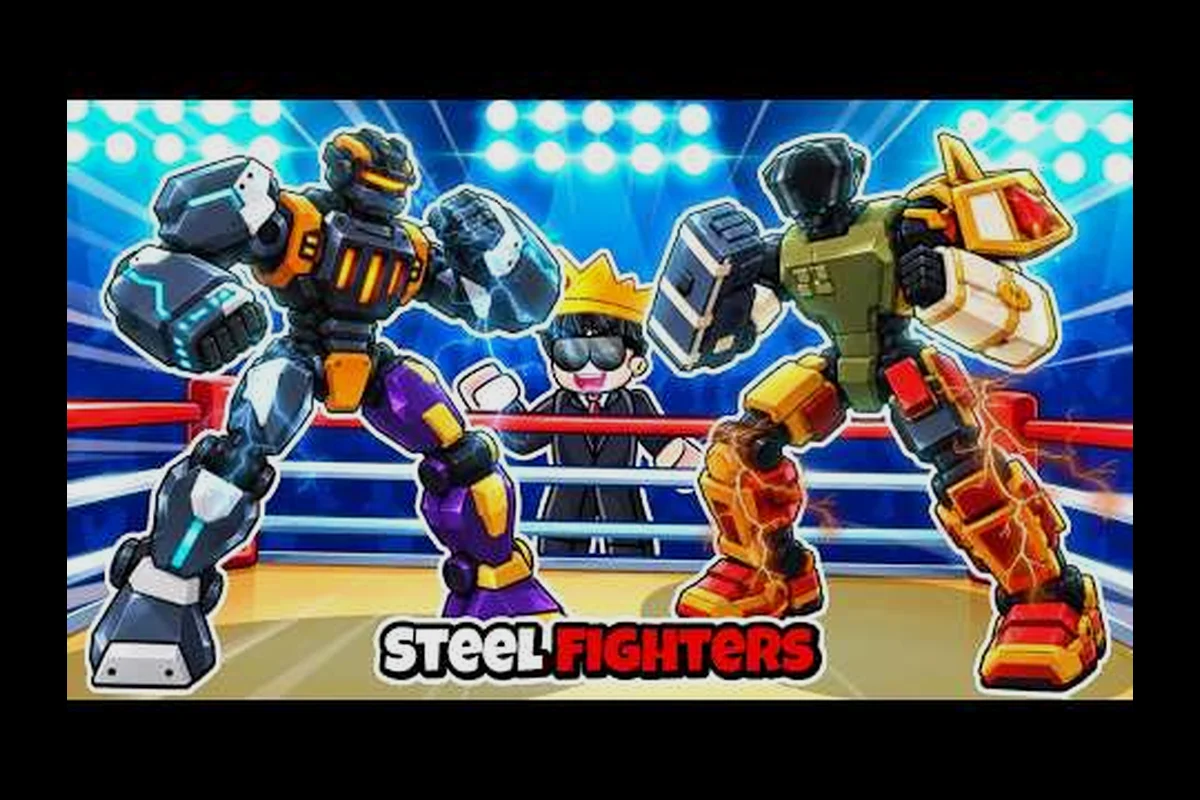
Choosing the right Steel Fighters support robot matters because a useful secondary unit can improve early-floor momentum, fill gaps in a lineup, and remain relevant when enemy difficulty rises. The best support robot depends on the role you need, the parts you can obtain, and how far your team can progress, so the strongest choice often changes between the first floors and the late game.
What Makes a Steel Fighters Support Robot Useful?
A Steel Fighters support robot should do more than follow the main fighter into combat. Its value comes from whether it covers a weakness, survives long enough to contribute, and can be maintained without consuming every scrap you earn. The official Steel Fighters page on Roblox describes a game built around assembling robots from more than 100 models, clearing endless floors, collecting scrap, upgrading parts, and using rebirth for stronger stats.
That structure makes support more than a cosmetic second slot. A support unit can finish weakened enemies, distract attackers, provide ranged pressure, or simply preserve a more valuable damage dealer by absorbing attention. It can also be a practical backup when your primary machine is missing an important part or still has several upgrades left to complete.
Identify the Role Before the Robot
Before choosing a unit, decide what your lineup lacks. A fast melee support robot may be better for interrupting enemies, while a ranged robot can attack from behind the frontline. A durable unit is valuable when bosses repeatedly break through the main robot, and a cheaper starter option can be more useful than an expensive unit that cannot be maintained.
| Your main problem | Support role to prioritize | Practical advantage |
|---|---|---|
| Bosses reach your main fighter | Durability or area damage | Buys more time for the primary robot |
| Damage is too slow against distant targets | Ranged pressure | Adds attacks without waiting for melee range |
| Early floors drain resources | Low-maintenance starter support | Preserves scrap for essential upgrades |
| One strong unit handles everything | Secondary finisher | Converts weakened enemies into faster clears |
| Your team lacks crowd control | Utility or multi-target damage | Reduces the number of enemies reaching your core robot |
The complete Steel Fighters robot list can help you identify which models correspond to these roles. A support robot is worth keeping if it creates a clear combat benefit, not simply because it appears early in the catalog.
Steel Fighters Starter Robot Choices
The most useful Steel Fighters starter robot is the one that helps you clear the opening floors while remaining easy to upgrade. The official developer group notes that group members can receive a free robot and that favoriting the game can award free parts, so early rewards may let you test multiple options before committing scarce resources.
The Steel Fighters beginner guide explains the wider progression loop, including assembling parts, using the Junkyard, and preparing for rebirth. A support pick becomes stronger when its parts are available through that routine rather than through a long, uncertain grind.
Compare Practical Starter Options
Because exact stat values can shift with updates and rewards, compare starter support robots by practical performance rather than relying on a single unverified number. The official page confirms the presence of more than 100 robots, but it does not provide a permanent floor-by-floor stat chart in the available material.
| Evaluation point | Strong starter robot | Weak starter robot | Why it matters |
|---|---|---|---|
| Early damage | Attacks reliably from the opening floors | Struggles against the first tougher enemies | Supports faster early progression |
| Survivability | Holds up during repeated encounters | Folds immediately when targeted | Preserves your main fighter |
| Part availability | Uses common heads, torsos, arms, or legs | Requires several rare components | Reduces upgrade friction |
| Upgrade cost | Remains affordable with regular scrap | Consumes nearly every early reward | Protects the main robot's budget |
| Role clarity | Covers a specific weakness | Offers redundant damage | Creates measurable team value |
A support unit that lands one or two useful attacks can still be worthwhile when its purchase cost is low. If it requires the same rare parts as your primary robot, however, it may delay the upgrades that produce the larger return.
Use a Two-Robot Test
The best way to evaluate a Steel Fighters starter robot is to run a controlled comparison. Equip the candidate with a decent head, torso, arms, and legs, then test it for several floors while keeping the main robot unchanged. Record clear time, damage contribution, survival time, and the resources spent repairing or upgrading either unit.
After the test, keep the support robot if it improves at least one measured result without making the main robot harder to maintain. For example, if a Steel Fighters starter robot consistently reduces incoming damage while the primary robot still clears the same floors at a comparable pace, its extra tier or repair cost may be justified. Compare the candidate’s damage contribution, survival time, and resource usage against the baseline; a useful support unit should free the main robot from pressure rather than merely replace its attacks.
-
It reduces the number of attacks landing on the primary robot.
-
It helps the team defeat enemies noticeably faster.
-
It continues fighting after the main robot is weakened.
-
It produces more practical value than a direct upgrade of the same cost.
If the candidate is merely decorative or duplicates the primary robot’s role, save the parts for a stronger Steel Fighters support robot. For example, a tier-1 support unit that lands the same damage as the primary robot without improving damage contribution, survival time, or floor-clear speed is not a true support upgrade. Redirecting those parts toward a later robot unlock—or a tier with better coverage or durability—preserves the team’s repair budget and prevents early excitement from forcing a permanent resource split.
Steel Fighters Robot Unlocks by Floor
Robots become more valuable as floors demand stronger stats, but the correct unlock target depends on your available parts and upgrade budget. The official Roblox page identifies endless floors and increasingly powerful bosses as central progression features, while community guides report that stronger robots and team play help players reach floor 30 and beyond.
A useful Steel Fighters robot unlock by floor plan separates discovery from investment. Find a promising model first, then determine whether its components can be completed using rewards you would realistically collect. A model displayed in the catalog is not automatically a practical early or mid-game upgrade.
| Progression stage | Main objective | Best support-robot approach | Upgrade priority |
|---|---|---|---|
| First floors | Learn combat and reach stable clears | Use an accessible starter support unit | Low-cost parts and durability |
| Middle floors | Reduce defeat frequency against tougher enemies | Add ranged pressure or a durable distraction | Main damage before premium support |
| Floor 30 and beyond | Survive stronger bosses and scaled enemies | Build a specialized second robot | High-impact upgrades on both units |
| Late-game farming | Improve efficiency and resource income | Keep a stable secondary damage source | Balance, uptime, and scaling |
Change Support Goals as Floors Rise
Early support usually succeeds by being inexpensive. Later support succeeds by scaling. If your main robot already reaches the required damage threshold but loses fights because enemies remain on the field, prioritize a durable distraction. If damage is the limiting factor, add ranged pressure or a faster finisher instead.
Players following a milestone-oriented progression route report that floor 30 introduces a noticeable demand for stronger team members. That observation should be treated as community-tested guidance rather than a permanent unlock rule, because enemy scaling and reward pools can change. The floor-30 and beyond gameplay video demonstrates that team size, upgrades, and boss timing can influence how far a lineup progresses.
The practical lesson is simple: advance by function, not by appearance. In Steel Fighters, a starter robot should be judged by the problem it solves, not by its visual tier. If a support robot survives long enough to occupy enemy attention while your main fighter lands damage, that synergy can be more valuable than a higher-tier-looking machine that competes for the same upgrade materials. When the main fighter is already reaching the damage threshold but struggles against remaining enemies, a durable distraction or reliable ranged pressure often improves the clear more than another damage dealer.
Steel Fighters Robot Tier for Support Roles
Assigning a Steel Fighters robot tier to a support unit requires more than copying a general damage ranking. Support value depends on uptime, range, crowd coverage, and the weakness it addresses. A lower-damage robot can occupy a higher practical tier if it consistently enables the main fighter to perform.
The 2026 Steel Fighters tier list is useful for comparing headline strength, but support players should read the underlying role rather than stopping at the letter grade. A premium melee robot may be excellent in the core lineup and poor as a support choice if it needs expensive upgrades to survive.
Practical Support Tier Framework
| Practical tier | Support performance | Typical use | Recommendation |
|---|---|---|---|
| S | High damage, strong uptime, and an obvious secondary benefit | Bossing and late-game floors | Build when parts and upgrades align |
| A | Reliable contribution with a clear role advantage | Mid-game progression and specialized teams | Strong general recommendation |
| B | Useful damage but requires support or favorable positioning | Early floors and backup units | Upgrade selectively |
| C | Narrow benefit, weak scaling, or high resource cost | Temporary lineup filler | Delay unless it completes a set |
| D | Little practical contribution after a direct comparison | Rarely recommended | Save resources for upgrades |
This framework changes the answer to whether a Steel Fighters robot tier is worth considering. The best S-tier fighter can still be a poor support unit, while an A-tier model with complementary range can be the more effective partner.
Compare Support by Team Synergy
A support robot should improve the team’s strengths or cover its weaknesses. If the main robot has excellent close-range damage, a ranged support model can attack enemies that otherwise escape. If the main robot lacks durability, adding a sturdy distraction can prevent focus fire from becoming a rapid defeat. If both units do the same job, team size may increase visual activity without improving clear speed.
| Main robot profile | Preferred support profile | Result to watch |
|---|---|---|
| Slow but powerful melee | Fast or ranged unit | More attacks before the primary engages |
| Fragile but high-damage | Durable distraction | Longer survival for the main damage window |
| Low-cost starter | Affordable utility unit | Strong progression without resource starvation |
| Ranged attacker | Close-range interceptor | Pressure on enemies moving toward the backline |
| Generalist fighter | Specialist support | A second role reduces team redundancy |
When comparing a candidate against ranked options, the tier-list maker for Steel Fighters can help organize the catalog by role, budget, and floor target. Remember to label support value separately from primary damage, since a single overall tier cannot represent both perfectly.
Choosing Steel Fighters Late Game Robots
Steel Fighters late game robots need reliable scaling because enemy strength continues to rise through the endless floor structure. A late support pick should be easy to keep active, avoid wasting attacks, and supply something the main fighter cannot provide alone. High base damage matters, but so do range, durability, and resistance to the enemy types that commonly reach the support unit.
The best early and late robot recommendations can provide a broader shortlist before you test support candidates. Late-game selection should still be based on the exact floor where your current team begins failing, because different boss patterns can make a normally excellent robot less useful.
Apply the Upgrade-Budget Test
Before committing to a premium Steel Fighters late game robot, compare its expected contribution with the upgrades it prevents you from buying elsewhere. If the support robot costs three rare part sets and contributes only occasional bonus damage, your main fighter may be stronger with those resources. If a cheaper unit consistently handles a secondary target, the investment can be justified.
| Decision question | Positive result | Negative result |
|---|---|---|
| Does it solve a real team weakness? | Yes, and the weakness appears every fight | No, it only repeats the main robot |
| Can it stay active on target floors? | Usually remains useful through the encounter | Frequently dies before contributing |
| Is the upgrade cost sustainable? | Leaves room for main-unit upgrades | Consumes nearly every reward |
| Does it scale with enemy pressure? | Remains effective as floors increase | Falls behind quickly |
| Can your team use its range? | Range complements the main robot | Positioning limits attacks |
Keep One Upgrade Path Open
Do not max every component simultaneously. Choose a coherent priority order, such as durability, core damage, range, or the part that completes a matching set. Community guidance explains that matched part sets can outperform mixed components, while mixed builds offer flexibility when a particular part is unavailable. You can review that system in the robot-part upgrade video.
For most teams, the strongest approach is to keep the main robot at a stable power level and assign the support robot one measurable job. A mid-cost specialist can then outperform an expensive unit that steals every scrap without solving the team’s real problem.
Is a Steel Fighters Support Robot Worth It?
A Steel Fighters support robot is worth it when it improves clear speed, protects the main fighter, or lets the team handle enemy patterns that one robot cannot cover. It is not worth upgrading blindly. The decision should compare the support unit’s contribution with the next upgrade available for the primary robot and with the cost of maintaining two active machines.
Calculate the Practical Return
Use a simple three-column log during testing. Record what happened with one robot, what changed when the support unit was added, and what resources were spent. Repeat the test on the same floors to reduce the effect of random drops or lucky upgrades.
| Metric | One-robot team | Two-robot team | Worth improving? |
|---|---|---|---|
| Average clear time | Record across several fights | Record across the same fights | Yes if the difference is noticeable |
| Hits received by main robot | Higher baseline | Often lower because attention is redirected | Yes if protection matters |
| Scrap spent per clear | Baseline spending | Higher spending must produce better results | No if gains are negligible |
| Contribution before defeat | Zero from support | Damage, distraction, or pressure | Yes if contribution is consistent |
| Upgrade delay on main robot | Main unit improves sooner | Main unit waits for support funding | Depends on current bottleneck |
If a support robot only makes fights look busier, it may not be a real upgrade. Judge it by measurable results in the three-column log: compare average clear time, hits received by the main robot, scrap spent per clear, and contribution before defeat. For example, if adding the starter robot reduces the main robot’s damage taken but increases scrap spent without improving clear time or survival, the support unit may be changing the fight’s appearance rather than its practical return.
Know When to Stop Investing
Stop investing when the support robot’s upgrades produce diminishing returns, especially if the main robot still cannot meet the floor’s damage requirement. In that situation, redirect resources, gather more scrap, or improve the primary fighter first. This is particularly important for Steel Fighters early game robots, whose low acquisition cost can make them tempting to overbuild.
Conversely, keep a support unit if it continues contributing after the primary robot is upgraded. The best Steel Fighters early game robots and Steel Fighters late game robots serve different stages, but both should have a clear condition for replacement: another unit now handles the role more efficiently, or your main fighter no longer needs the protection.
Frequently Asked Questions
What is the best Steel Fighters support robot for beginners?
The best Steel Fighters support robot for beginners is an accessible unit that attacks reliably, survives early encounters, and uses parts you can obtain without delaying your main fighter. Compare two affordable models over several floors and keep the one that reduces damage to your primary robot or speeds up clears. Avoid spending rare parts on a support unit before your main robot has a functional build.
Which Steel Fighters starter robot should a new player prioritize?
Prioritize a Steel Fighters starter robot that contributes a different attack range from your main unit. Ranged pressure is useful when your fighter is slow to reach enemies, while durability can help if bosses survive long enough to damage your core robot. The starter rewards available through the official developer group can also give you several free options, so test them before committing scarce scrap.
How do I know whether a Steel Fighters support robot is worth it?
A support robot is worth it when it consistently improves clear time, protects the main fighter, or defeats enemies that your primary robot handles slowly. Run the same floors with and without it, and compare resource spending as well as results. If the two-robot team costs significantly more but performs almost identically, save those resources for a direct upgrade.
When should I replace an early Steel Fighters support robot?
Replace an early support robot when another unit handles its role more consistently, when your main fighter no longer needs its protection, or when support upgrades stop producing meaningful gains. At middle floors, stronger enemies can expose weak early-game coverage. Use the complete robot catalog to identify a replacement that complements your upgraded main robot rather than duplicating it.
Are premium Steel Fighters late game robots always better?
No. Premium Steel Fighters late game robots are only better when their stronger performance solves a current team problem and their upgrade cost fits your resource plan. A specialized support unit can outperform a more expensive generalist if it stays active, attacks the right targets, and protects your primary fighter. Test candidates on the floor where your team actually struggles before committing rare parts.