
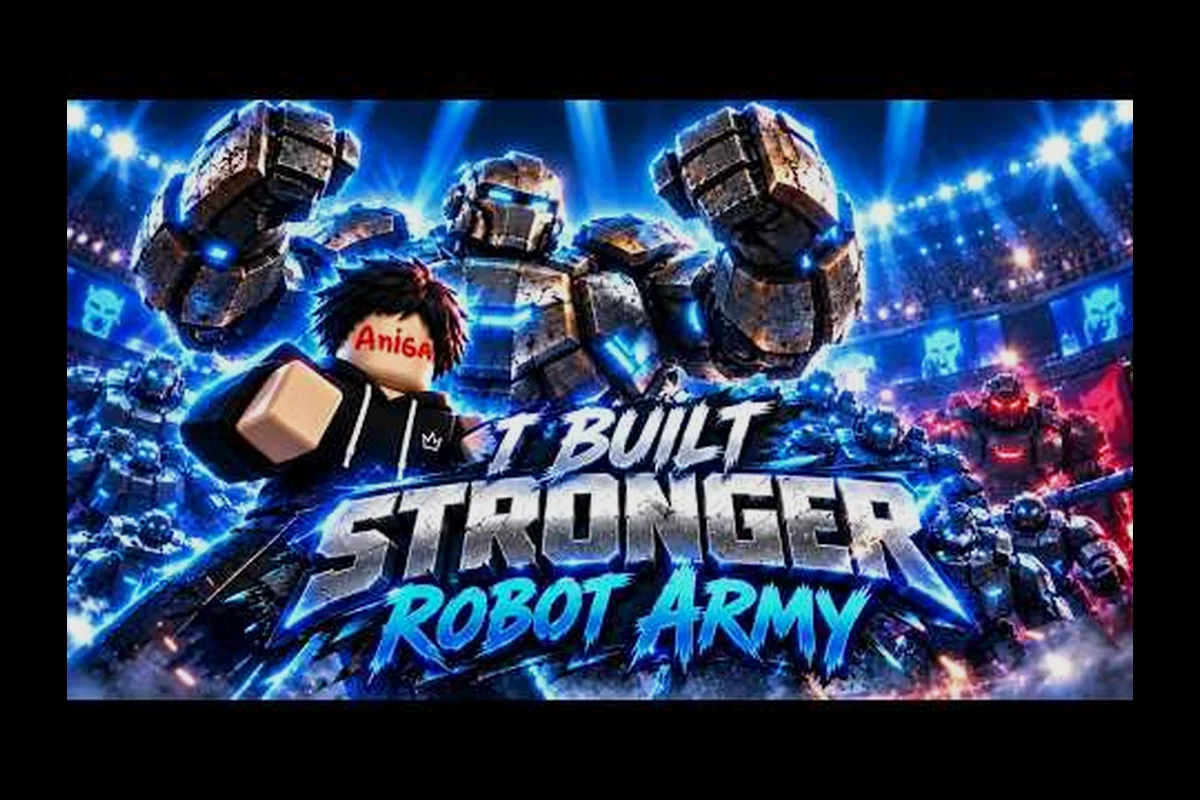
The steel fighters hardest boss demands more than raw damage: you need balanced stats, a resilient team, and a clear upgrade plan. Learn which encounters matter, how the floors scale, and how to turn repeated attempts into steady progress.
What Makes the Steel Fighters Hardest Boss Hard
Steel Fighters is built around assembling robots from interchangeable parts, collecting scrap, improving those parts, and advancing through an endless series of floors. The official Steel Fighters game page describes more than 100 robots, endless-floor progression, powerful bosses, rebirth bonuses, and the ability to challenge higher floors. Because enemy strength keeps rising, a boss that is difficult on one floor may be manageable after your robot lineup and rebirth multipliers improve.
The steel fighters hardest boss is not simply a fight with the biggest number attached to it. A successful attempt depends on three linked factors: the damage your lineup can reliably deliver, how long the enemy remains active, and whether your robots can survive the attacks needed to reach that damage threshold. A strong single robot can still lose to a coordinated boss if it is overwhelmed before its best attack becomes available.
What the official game page establishes
The official listing confirms the central progression loop, but it does not publish a complete, permanent stat sheet for every boss. That distinction matters because live-service games can adjust health, rewards, or floor scaling. The facts below are therefore separated into confirmed mechanics and community-reported strategy rather than presenting estimates as permanent values.
| Confirmed feature | Practical meaning for the hardest-boss attempt |
|---|---|
| More than 100 robots | You have multiple body styles and part combinations to account for enemy traits |
| Endless floors | Difficulty continues rising instead of ending at one fixed final area |
| Powerful bosses | Each floor can introduce mechanics that make raw damage insufficient |
| Part upgrades | Your robot's practical power depends on more than its initial rarity |
| Rebirth bonuses | Earlier progression can multiply stats and reduce repeated grind |
| Junkyard scrap collection | Materials support upgrades between combat encounters |
This means the best answer to the steel fighters hardest boss depends on the version you are playing. If your current floor difficulty suddenly feels excessive, the likely answer is not always to replace an entire robot; it may be that one weak part is causing damage, survivability, or attack speed to fall behind the scaling curve.
The real difficulty curve
Community progression reports emphasize that adding robots to the lineup, upgrading parts, and using team play help players push beyond floor 30. That milestone is important because late floors are where enemy scaling begins to punish a roster made entirely of early-development units. Your goal should not be a perfect museum of rare robots, but a lineup whose roles overlap without making every unit fight exactly the same way.
| Progression state | Likely result against a late boss | Most useful response |
|---|---|---|
| Mostly starter robots | Low damage and poor durability | Farm earlier floors and upgrade every active part |
| One upgraded robot | Risk of focused damage or an early knockout | Add complementary robots and test utility coverage |
| Several upgraded robots | Better survival and steadier damage | Optimize attack order and eliminate the weakest slot |
| Rebirth bonuses applied | Higher effective stats across the lineup | Challenge a higher floor and revise the build afterward |
| Floor 30+ capable team | Access to stronger encounters | Test boss mechanics, then farm for targeted upgrades |
The steel fighters strongest boss is therefore best understood as a scaling test. A team that clears floor 30 does not automatically dominate every later encounter, because each new floor can change the required balance. Confirm your current build against the boss on floor 30 overview before chasing a later milestone.
Preparing a Boss-Ready Robot Lineup
A successful boss attempt starts long before the arena. Steel Fighters lets you mix and match robot parts, so the useful preparation phase is deciding which combat roles your team must cover. Consider raw damage, time to defeat, health, and the special behavior of the target. Because a team that deals excellent damage but dies too quickly cannot convert that damage into a reward, survival deserves equal weight in every rebuild.
For solo play, use fewer robots and make each slot count. A compact lineup is easier to upgrade because scrap can be directed toward one part at a time. Multiplayer play offers more coverage, but teammates still need a shared objective: identify the dangerous phase, focus the same target, and avoid wasting powerful attacks during a noncritical opening.
Choose roles instead of chasing one universal robot
The Steel Fighters robot tier list can help compare available units, but a high tier does not automatically solve a specific boss encounter. A rare robot may provide exceptional damage, yet it can still be a poor final slot if your other robots provide neither durability nor useful area pressure. Build around function instead of prestige.
| Role | Desired strength | Why it matters in a long boss fight | Upgrade priority |
|---|---|---|---|
| Main damage dealer | High sustained damage | Shortens the encounter and reduces incoming attacks | Damage and attack speed |
| Tank | High effective health | Preserves the team during the boss's most punishing phase | Health and defense |
| Support or controller | Reliable utility or crowd pressure | Creates safer attack windows for the main dealer | Duration and synergy |
| Secondary damage dealer | Consistent fallback damage | Covers temporary setup, cooldown, or targeting gaps | Balanced damage and health |
| Finisher | Burst damage at a useful moment | Converts a short opening into a decisive advantage | Critical damage and burst stats |
Avoid replacing every component at once. Make one change, test it on a normal floor, and compare survival time and clear speed. The solo versus multiplayer progression guide is useful for deciding whether your next upgrade should strengthen one specialist or make a team strategy work.
Upgrade order that supports difficult fights
A reliable upgrade order starts with the part that limits your time-to-kill, then improves the robot that survives longest in the current lineup. This approach is more efficient than spreading scrap across every component. If a weak arm produces low damage, no amount of health lets that unit finish enemies quickly; if a fragile body cannot survive the opening, even excellent output may be lost.
| Problem observed during testing | Likely limiting stat | Best adjustment |
|---|---|---|
| The main robot deals low damage | Damage or attack speed | Upgrade its offense before adding a new unit |
| The team dies during a specific attack | Health, defense, or team coverage | Add a tank or improve the most vulnerable slot |
| Damage arrives too slowly | Time-to-kill | Increase the main dealer’s output |
| A strong unit performs poorly | Wrong role or weak secondary part | Replace only the defective part |
| Progress stops after several wins | Gear score, rebirth multiplier, or upgrade depth | Rebirth or return to earlier floors for better materials |
Do not chase steel fighters boss stats from an unofficial chart without checking the current version. The official materials do not supply permanent numerical values for every boss health pool, and community data may only reflect a particular date or difficulty setting. Use the in-game combat log, damage numbers, and survival time to judge changes in the steel fighters boss health and boss stats you are actually facing.
Steel Fighters Boss Stats and Health: What Matters Most
Boss health is only one part of the encounter. The number that directly affects your attempt is the combination of boss health, your effective damage per second, and the damage you receive before the fight ends. A boss with a larger health pool can still be easier if your damage output rises proportionally and its attacks become less frequent or less punishing.
Players often focus on the total health bar and overlook the battle's pacing. That mistake can lead to a build that wins slowly but safely, even though a small upgrade to attack speed would cut the number of incoming attacks dramatically. Measure performance from the first attack to the final kill, not only from the result screen.
Read the fight as four separate checks
The first check is whether your team can survive the opening. The second is whether it can maintain damage during the boss's active phase. The third is whether the main dealer can exploit a critical or vulnerability window. The fourth is whether your lineup still has enough health and resources to finish after the boss enters a final pattern.
| Fight check | What to observe | Practical response |
|---|---|---|
| Opening survival | Damage taken before the team establishes control | Improve health, defense, or frontline coverage |
| Damage consistency | Gaps caused by targeting, cooldowns, or setup | Add a secondary attacker or upgrade attack speed |
| Critical window | Time available to use the strongest ability | Align team focus and hold burst attacks for the useful phase |
| Finishing power | Damage remaining as the boss nears defeat | Improve sustained damage instead of relying only on burst |
A community-reported approach for late floors is to rotate floors rather than remain on one difficult level indefinitely. Fighting an easier floor can produce more scrap, and that resource can fund the upgrade that removes your current bottleneck. This is especially effective when the boss health pool is high but your team can handle its attacks; in that case, farm first, upgrade second, and return with a stronger roster.
The key distinction between the steel fighters strongest boss and a merely high-level boss is how efficiently your lineup scales against the encounter. A late boss that takes far longer to defeat gives every enemy action more time to matter, so small improvements can have an outsized effect. Track the fight duration, the number of robots still active, and the point at which the final robot began taking damage.
Use community observations carefully
The VendoPlus Steel Fighters progression video reports that larger lineups, stronger robots, upgrades, and team play help players reach floor 30 and beyond. That supports a practical conclusion: progression is cumulative, and the floor-30 threshold may expose weaknesses that early bosses never required.
However, a community guide is not a permanent stat authority. Treat figures and mechanics as as of October 2026 observations unless the official game page states otherwise. The steel fighters boss health and boss stats shown by your client are more reliable for planning, while community experience is valuable for identifying trends such as rising enemy scaling and the value of stronger robots.
Attacking the Steel Fighters Secret and Hidden Boss Encounters
Players use the terms secret boss and hidden boss differently, so it is important to separate an undiscovered encounter from a concealed reward condition. The official Steel Fighters materials confirm that powerful bosses appear during endless-floor progression, but the available official listing does not identify a complete catalog of secret or hidden bosses. The most responsible approach is to use the game’s floor progression and milestone clues without presenting an unverified discovery method as confirmed fact.
This distinction prevents a common error: repeating an unverified rumor, defeating an ordinary floor boss, and assuming a secret trigger must have failed. Some hidden objectives may depend on reaching a milestone, completing a challenge, or using a particular encounter sequence. The supplied official and community references do not provide enough verified evidence to name every condition.
Confirmed clues and unverified discovery claims
| Clue | What can be said responsibly | Verification status |
|---|---|---|
| Endless floors exist | Later floors can contain stronger enemies and new encounters | Confirmed by the official game page |
| Floor 30 is a progression milestone | Community reports show players reaching and beyond it with stronger teams | Community-reported |
| Boss order exists | Encounter sequence can change as floors progress | Confirmed broadly by the floor system |
| A specific secret boss exists | Some players may refer to unusually rare or milestone encounters | Not fully documented by the supplied sources |
| Hidden rewards may exist | The official page confirms general progression rewards and upgrades | Confirmed in general, not tied to one hidden boss |
| One exact code unlocks every secret | No universal unlock method can be confirmed from the supplied data | Unsupported claim |
The steel fighters secret boss should therefore be approached through legitimate progression rather than folklore. Clear earlier floors, collect scrap, and test milestone floors with a stable team. If an encounter has unusual music, visual effects, a separate arena, or a reward message absent from standard fights, those are stronger clues than an unverified online checklist.
A practical discovery routine
This routine helps you distinguish a genuine hidden encounter from a missed standard boss. Record the floor number, your lineup, the spawn sequence, and whether any unusual text appears. Repeat the attempt only if a mechanic is clearly unfinished, because chasing a rumor can waste materials that would improve your actual combat power.
-
Clear the normal floor objective: Finish the required enemy set so the boss phase can begin normally.
-
Record your exact setup: Note the robots, upgraded parts, and total effective team size for the run.
-
Watch the transition: Look for a different arena, changed lighting, extra dialogue, or a reward category that does not appear in ordinary encounters.
-
Compare milestone runs: Repeat the same floor with the same team, because secret-condition testing is more reliable when every variable is controlled.
-
Check the reward panel: Confirm whether a new drop appears and record its name and quantity.
The steel fighters hidden boss remains difficult to document without version-specific testing, but a clear observation log is better than repeating vague claims. If you are still building toward late floors, the strongest robot resource can help identify candidates for a more capable discovery team.
Rewards, Drops, and the Steel Fighters Boss Drops
The official game page confirms the importance of collecting scrap, upgrading parts, and progressing through bosses. It does not provide a complete public drop table for every Steel Fighters encounter. As a result, the steel fighters boss drops should be evaluated through the rewards players actually receive, not through invented item names or guaranteed quantities. A reward may include materials, parts, robot-related progression, or another progression resource, and its practical value depends on your current upgrade target.
Community reports repeatedly emphasize scrap collection, stronger robots, and part upgrades as the foundation of late-game growth. That makes drops valuable even when they are not a new collectible, because scrap converts directly into the stats needed to survive tougher floors. Before a difficult attempt, identify the exact upgrade you want so you can judge whether the reward justifies the time invested.
Reward categories worth tracking
| Observed reward type | Best use | What to record |
|---|---|---|
| Scrap | Part upgrades and stronger loadouts | Amount and floor source |
| Upgrade materials | Improving specific robot slots | Item name, quality, and quantity |
| Robot parts | Completing or upgrading a build | Part type and stat impact |
| Free robot opportunities | Expanding role coverage | Whether it came from a reward track or boss |
| Boss-only currency or items | Specialized progression | Exact name, amount, and encounter |
| Repeated materials | Long-term upgrade reserves | Drop rate across several attempts |
Because no verified universal boss-drop table appears in the supplied official data, treat reward claims cautiously. A screenshot from an early version may not reflect the current release, and private-server or boosted difficulties may have different rewards. Record the game version, difficulty, floor, and whether you were in a group when testing.
Make every attempt economically efficient
A hard boss should be treated as a progression checkpoint, not a random gamble. Enter only after completing the upgrades that address the encounter's visible limitation. If your team dies before the boss's final phase, farm for health; if it reaches the final phase but cannot finish, farm for damage or attack speed. Returning at a slightly higher floor can be more productive than repeatedly challenging one wall.
| Current result | Most valuable next upgrade | Efficient farming target |
|---|---|---|
| Team is removed quickly | Health or defense | A floor that reliably clears with minimal losses |
| Boss survives for a long time | Damage or attack speed | The current floor or one nearby milestone |
| Key robots never activate | Compatibility or role coverage | An easier floor with varied enemies |
| Reward is not useful yet | Targeted farming | Gather only the currency or material needed |
| The team wins but progress remains slow | Rebirth multipliers | Enough scrap and strength for a rebirth |
This is also where understanding the steel fighters boss drops pays off. The most valuable drop is the one that removes the next obstacle. A rare-looking material has little value if your team cannot activate the damage dealer, while a modest scrap gain can be transformative after several upgrades.
Team Tactics for Repeated Boss Attempts
Repeated attempts become efficient when each run tests a specific hypothesis. Changing the whole lineup after every defeat makes it difficult to identify what improved the result. Keep a stable core, isolate one variable, and record whether the fight became shorter, safer, or simply more rewarding.
A good boss team should have a clear damage order. In cooperative play, coordinate the first target and the timing of major attacks. During the most dangerous phase, the team may need to stop spreading damage and concentrate fire. The boss enrage and floor-order guide can help you understand the pressure points reported around boss timers and milestone floors.
The repeatable attack cycle
Start with a defensive or setup phase, then commit the main damage dealer. If the boss changes behavior, identify whether that change adds health, creates a vulnerable window, or demands protection. After the fight, record one primary metric: time remaining, total team health, or clear consistency. The best metric is whichever stage currently stops your progress.
| Attempt | Change tested | Keep everything else fixed? | Record |
|---|---|---|---|
| 1 | Baseline run | Yes | Time and result |
| 2 | More frontline health | Yes | Survival change |
| 3 | One slot removed | Yes | Time-to-kill change |
| 4 | Secondary attacker added | Yes | Role coverage change |
| 5 | Rebirth upgrade | Yes | Long-term comparison |
Do not enter a new run immediately after a close victory unless you have a specific reason. The reward from the steel fighters hardest boss may be more valuable when the team can repeat the clear consistently. A fast but unstable strategy may farm a bonus, while a slower stable strategy can unlock the next progression tier.
Adjust for the encounter, not for an imaginary script
Boss behavior can change based on the encounter, and player experience varies with the current version. The safest method is to respond to visible signals: extra attacks mean more defense, a healing phase means more damage, a target change means better coordination, and a sudden timer increase means faster clears. This adaptive approach remains useful even if exact steel fighters boss stats change after an update.
The steel fighters strongest boss attempt should end with a clear conclusion. If you fail, identify whether the limit was your opening defense, sustained damage, or finishing burst. If you win but receive poor drops, decide whether the next run should improve the fight or farm materials elsewhere. That distinction keeps progression focused and prevents repeated attempts from becoming random.
A Complete Preparation and Attempt Plan
The fastest route toward the steel fighters hardest boss is a repeatable loop of preparation, testing, and targeted farming. Begin with the strongest three roles you can build, upgrade the part that limits clear speed, and test the lineup before taking on a new floor. Keep an upgrade reserve for health because a high-damage team still needs enough time to land attacks.
The plan below turns the available information into a practical sequence. It does not claim a guaranteed drop or a permanent health value, because the supplied official sources do not publish those details. Instead, it uses confirmed features—endless floors, robot construction, scrap, upgrades, rebirth, and team play—to create a reliable progression process.
Pre-Attempt Checklist
-
Complete the current floor: Clear the required normal enemies so the boss trigger can occur naturally.
-
Inspect the newest floor requirement: Compare the current milestone with your last successful clear.
-
Select at least two roles: Use a main damage dealer and a durable frontline unit at minimum.
-
Check part quality: Replace or upgrade the weakest offensive part before changing the entire roster.
-
Review rebirth bonuses: Apply permanent stat gains before attempting a significantly higher floor.
-
Target one upgrade: Decide whether the immediate need is damage, health, or attack speed.
Mid-Fight Adjustments
| Moment | Team action | Reason |
|---|---|---|
| Opening seconds | Survive and identify the first pattern | Avoid an unnecessary early knockout |
| Normal phase | Focus the primary target | Concentrate damage instead of spreading it thin |
| Strong attack window | Use major abilities together | Exploit a short opening |
| Healing or shield phase | Maintain damage pressure | Prevent the fight from resetting |
| Final stretch | Keep the main dealer alive | Preserve the unit that can finish the boss |
Post-Attempt Review
Compare the result with your baseline rather than judging only by victory or defeat. If you lasted longer, your health change worked. If the boss health fell faster, the damage change worked. If neither improved, inspect role coverage and part compatibility, because adding raw levels to the wrong component will not fix an activation or survivability problem.
| Result | Diagnosis | Next action |
|---|---|---|
| Shorter fight, more robots alive | Strong upgrade | Test the next floor |
| Same duration, better survival | Defense improved | Add damage afterward |
| More damage but shorter survival | Overcommitted damage build | Add health or a tank |
| Clear time worsened | Weak or misfit robot slot | Replace that unit |
| No meaningful reward gain | Wrong farming target | Collect the needed resource elsewhere |
This method keeps the steel fighters boss drops meaningful because every upgrade or retry has a defined purpose. It also helps when investigating the steel fighters secret boss, since controlled runs make unusual effects easier to detect than random experimentation.
Final Preparation Checklist
The steel fighters hardest boss becomes manageable when your team has enough health, enough sustained damage, and a tested attack order. The official game supports this progression through robot customization, scrap collection, upgrades, rebirths, and endless-floor challenges. The missing ingredient is usually one specific bottleneck, so measure the fight and fix that weakness instead of replacing everything indiscriminately.
| Preparation area | Ready condition | Warning sign |
|---|---|---|
| Damage | Main dealer clears within a practical time | Boss health barely moves |
| Survival | Team survives the opening and strongest phase | Robots are removed in seconds |
| Roles | Every slot has a clear purpose | Several robots perform the same task |
| Upgrades | Weakest important part has been improved | Resources are spread too thin |
| Rewards | Farm target matches the next requirement | Drops do not solve the current problem |
| Team coordination | Players share focus and ability timing | Damage is scattered |
Use community reports to identify trends, especially around floor 30 and stronger robot lineups, but verify all numbers in your current client. If you reach a milestone, record the steel fighters boss health, steel fighters boss stats, and steel fighters boss drops you observe. Those personal records will become more useful than any outdated static guide once balance changes.
Frequently Asked Questions
What is the Steel Fighters hardest boss?
The Steel Fighters hardest boss is generally the most demanding endgame encounter reached through the game’s endless-floor progression, although no permanent universal listing is supplied by the official page. Difficulty depends on your current version, robot lineup, rebirth bonuses, and upgraded parts. Practice milestone floors and track time-to-kill to identify which boss you are actually ready to challenge.
Which Steel Fighters strongest boss should players prepare for?
Preparation should focus on the latest floor milestone you can consistently reach, because enemy scaling changes as floors advance. A team built for floor 30 may need different health, damage, or role coverage on a later floor. Use the floor 30 boss overview as a benchmark, then test with your current lineup.
How do players find a Steel Fighters hidden boss?
There is no single verified method for every hidden encounter in the supplied sources, so avoid treating rumored codes as confirmed facts. Clear floors normally, reach meaningful milestones, and record unusual arena changes, dialogue, or reward categories. Controlled comparisons with the same team make discovery evidence stronger than random attempts based on unverified community claims.
What are the most valuable Steel Fighters boss drops?
The most useful drops are the materials that improve the part of your build currently limiting progress, such as scrap for damage, health, or attack speed. The official page confirms scrap collection, part upgrades, and boss progression but does not publish a complete drop table. Record drops from your own version and compare them with your next upgrade target.
Is the Steel Fighters secret boss stronger than every normal boss?
It may be, but strength and rarity are separate questions. A milestone or hidden encounter can remain weaker than a later standard boss if it appears on an earlier floor, while a normal late-floor enemy may have far greater health and damage. Judge every encounter by its mechanics, scaling, required time-to-kill, and the rewards it provides rather than by its label alone.